South-East Tour
A stay in Milan can also involve exploring the surrounding area, featuring other cities of historic and cultural interest.
The second itinerary sets off towards the south east, in discovery of evocative destinations such as Mantua and Bergamo.
After a buffet breakfast at Hotel Santa Barbara, which includes traditional American breakfast offerings, a gluten-free corner and various solutions for a balanced start to the day, with organic products and fruit (sliced, fruit salad, fruit in syrup, tropical fruits and smoothies), you can set off on the itinerary.
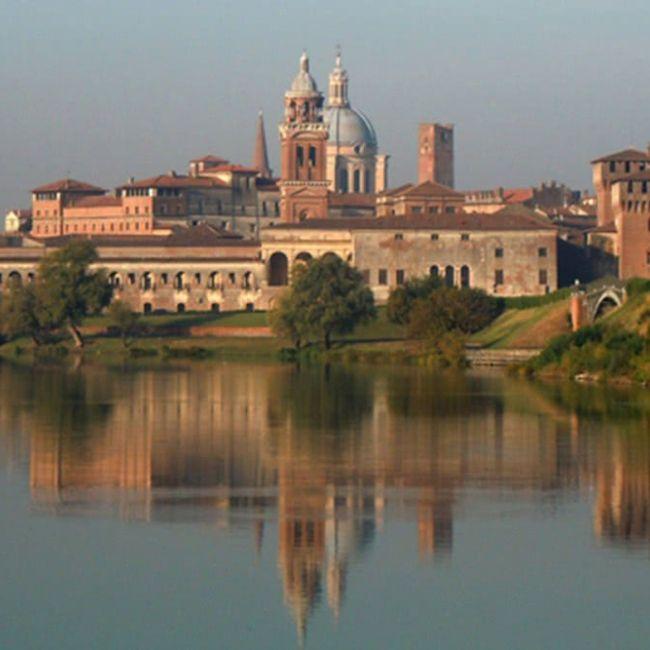
Leaving Hotel Santa Barbara and heading south, the first stopping point is Mantua, a UNESCO world heritage site since 2008. The city is constructed around three lakes in the heart of the Po Plain, and one of the best times to visit is in July and August, when thousands of lotus flowers bloom on Lago Superiore.
Like others in Paris, Vienna or Caserta, Mantua’s Palazzo Ducale was a fully fledged royal residence: it contains over 500 rooms and was the home of the Gonzaga family for centuries, until 1700.
What can be seen today is the result of the merger of multiple buildings, including Palazzo del Capitano, Corte Vecchia and Castello di San Giorgio, located between Lago Inferiore and Piazza Sordello.
Inside Castello di San Giorgio is one of the city’s most important works, the Camera Picta, also known as Camera degli Sposi, frescoed by Andrea Mantegna in the mid 15th century.
A short distance away is Palazzo Te, whose name derives from Teieto, an island located near the city. The palace is best known for the Sala dei Giganti ("Hall of the Giants"), in which Giulio Romano depicted the myth of Jupiter punishing the giants for their attempt to challenge the gods, with a cycle of frescoes which covers the entire floor to ceiling without interruptions.
In Piazza Mantegna is the Basilica di Sant’Andrea, where history and tradition weave together: according to legend, it holds a relic containing soil soaked in the blood of Christ, gathered by Longinus, the Roman centurion who pierced his side with the lance, and subsequently hidden in Mantua.
The visit to Mantua concludes in Piazza San Pietro, the city's founding square, where some of the main monuments are located, including the cathedral, Palazzo Vescovile ("Bishops Palace") and Palazzo degli Uberti.
Before leaving, however, it is worth visiting nearby Sabbioneta, a significant example of a renaissance city. Built in just 30 years at the behest of the Gonzaga family, it represents a model residential, rural and fortified city designed from scratch.

Continuing to the east you will arrive in Bergamo, another major Lombardian city featuring an upper town and a lower town, where historic elements and contemporary development coexist perfectly.
Among the main attractions are the Venetian walls, located in the upper part of the city and a UNESCO world heritage site. Built in the 16th century by the Republic of Venice, they had a defensive function.
The centre of the upper town is Piazza Vecchia, featuring architectural masterpieces such as the Torre Civica (bell tower), the Contarini fountain, and Palazzo della Ragione, considered the oldest municipal seat in Lombardy.
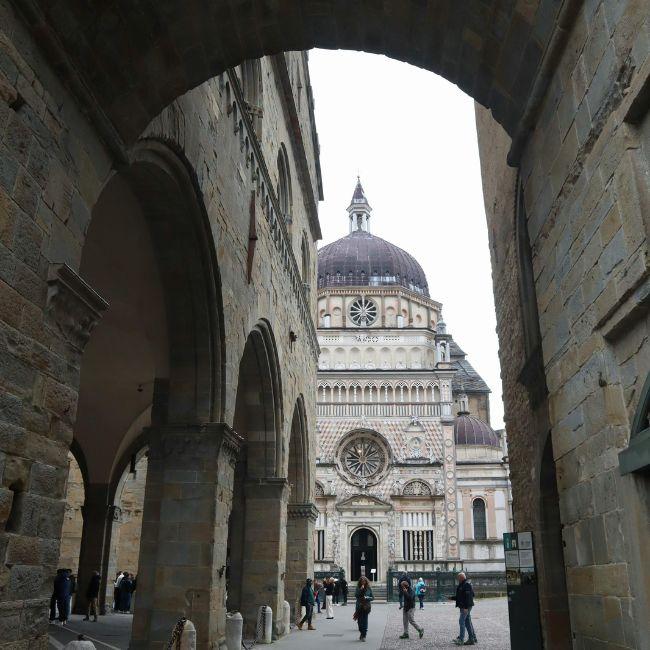
A short distance away is Accademia Carrara, an art gallery with works by artists including Sandro Botticelli, Raffaello Sanzio and Andrea Mantegna.
The cathedral, or Duomo, is as austere on the outside as it is rich in decorations and tapestries internally. Alongside it is the Basilica di Santa Maria Maggiore, a sumptuous church featuring Gothic elements, such as the lions guarding the entrance, and high-impact decorative features.
If the hub of Bergamo's upper town is Piazza Vecchia, in the lower town this central role is played by Piazza Matteotti, the hub for modern-day city life and centre of shopping and nightlife. Leading off from here is Via XX Settembre, the city’s main shopping street.
Returning to the area around Milan, the last stop on the itinerary is Monza, internationally famous for two distinctive elements: the Royal Villa and the Monza Circuit. The Royal Villa is one of the city's main historic complexes. The surrounding park, totalling around 8 km², offers extensive green space and is particularly well suited for walks and open-air relaxation. The building, previously belonging to the Habsburgs, is now open to visitors, who can tour the private apartments and learn more about the life and habits of this famous royal family.
Within the park is the Monza Circuit, officially called the Autodromo Nazionale Monza, one of the oldest in the world, the third purpose-built racing circuit after Brooklands and Indianapolis.
It is one of the stops on the Formula 1 calender, with the Grand Prix traditionally staged in September.
The location for numerous races during the year, it can also be booked for private track sessions.
The entire staff of Hotel Santa Barbara is available to provide information and support in organising visits.
art and culture tour
The best times of year to visit Milan are mid-late spring and early autumn, when the climate is at its best for discovering the city.
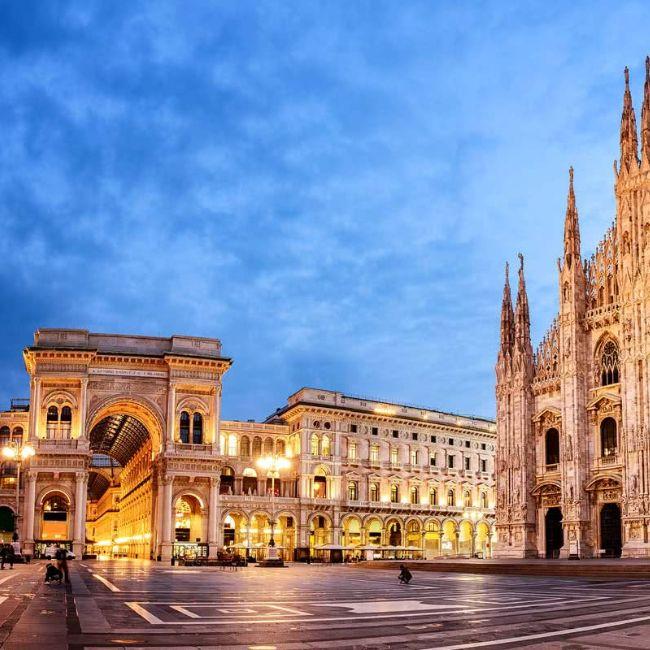
The itinerary can begin in Piazza del Duomo, the centre of the city from which the main streets branch off. Here you will find the famous cathedral, Duomo di Milano, one of the most significant examples of Gothic architecture, featuring a combination of Nordic elements and Lombard tradition.
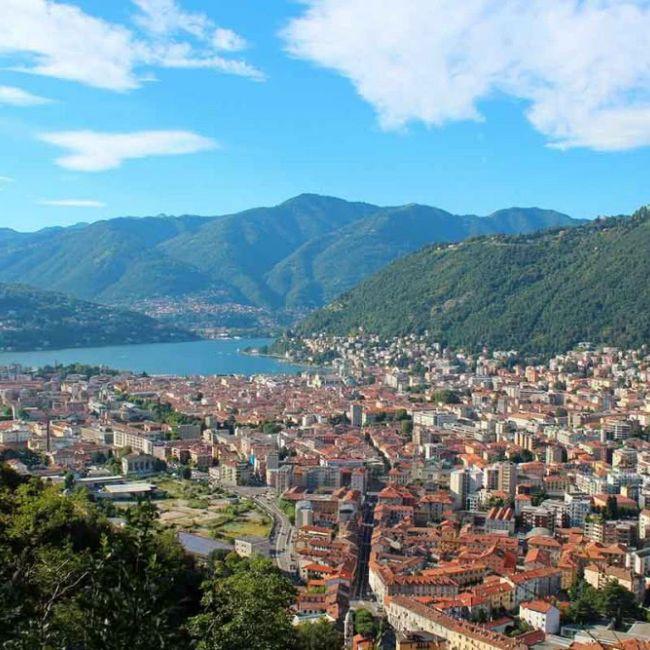
north-west Tour
A stay in Milan can also involve exploring the surrounding area, featuring the famous lakes and other cities of interest.
The first itinerary takes in the area to the north-west of the city, discovering the lake areas and breathtaking landscapes of particular interest.